
The State of Ongoing Work to Combat Corruption in Healthcare Sector in Namangan Is Studied
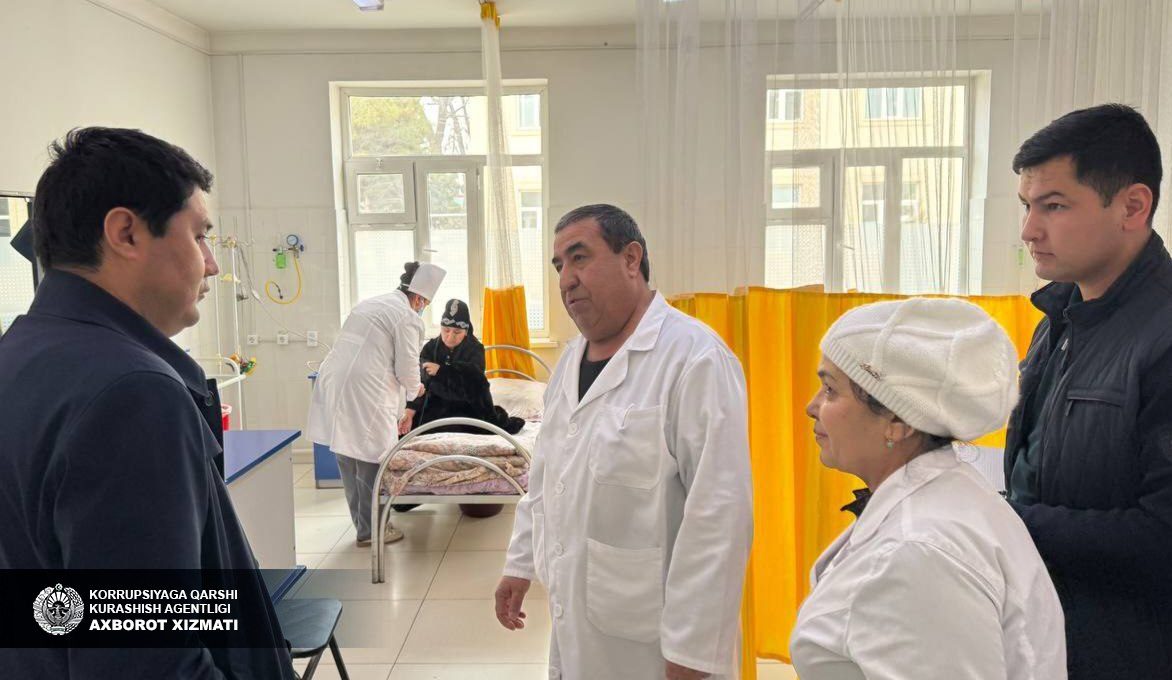
The meeting recently chaired by the head of state, dedicated to priority tasks in the social sphere, set important tasks in a number of areas, including digitalization of the healthcare sector, creation of a transparent personnel selection system by posting all vacancies on the online platform, targeted use of budget funds, fighting against with corruption and illegal trafficking of medicines.
For the purpose of ensuring the implementation of these tasks, the Anti-Corruption Agency working group, currently visiting Namangan Region, studied the state of work carried out to combat corruption in the medical associations of Norin and Uychi districts, as well as the regional branch of the Republican Research Center of Emergency Medicine.
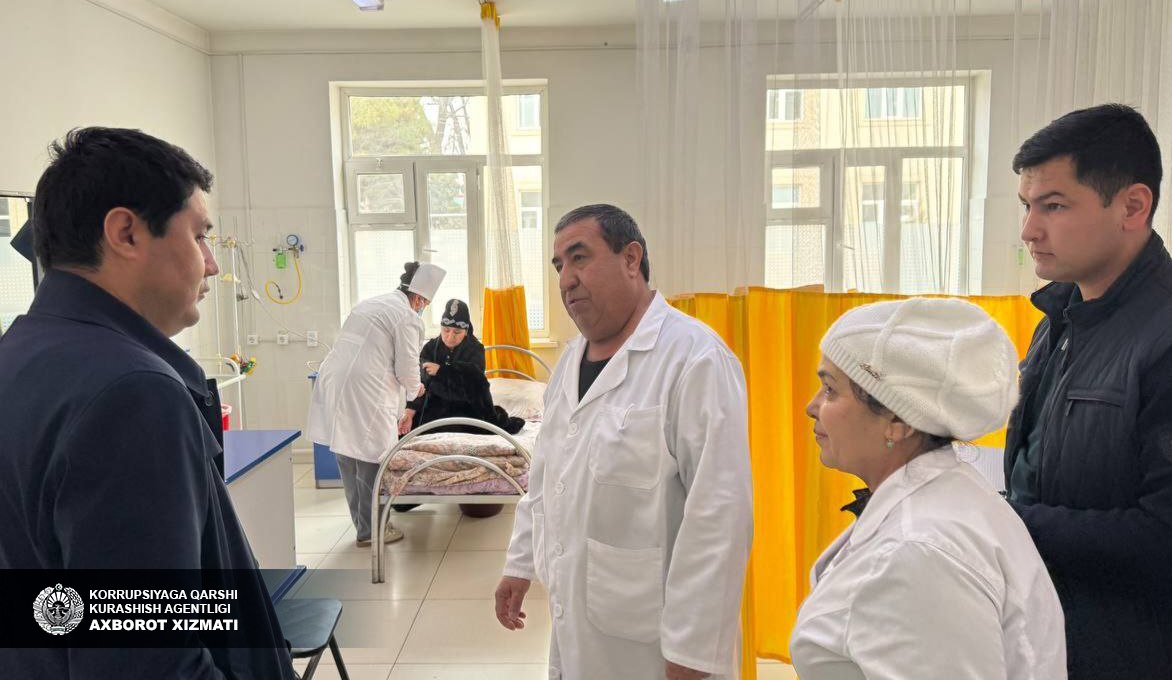
During the study, special attention was paid to the tasks and instructions set by the President to combat bureaucracy and corruption in the field, as well as to ensure the implementation of the Corruption-Free Area Project.
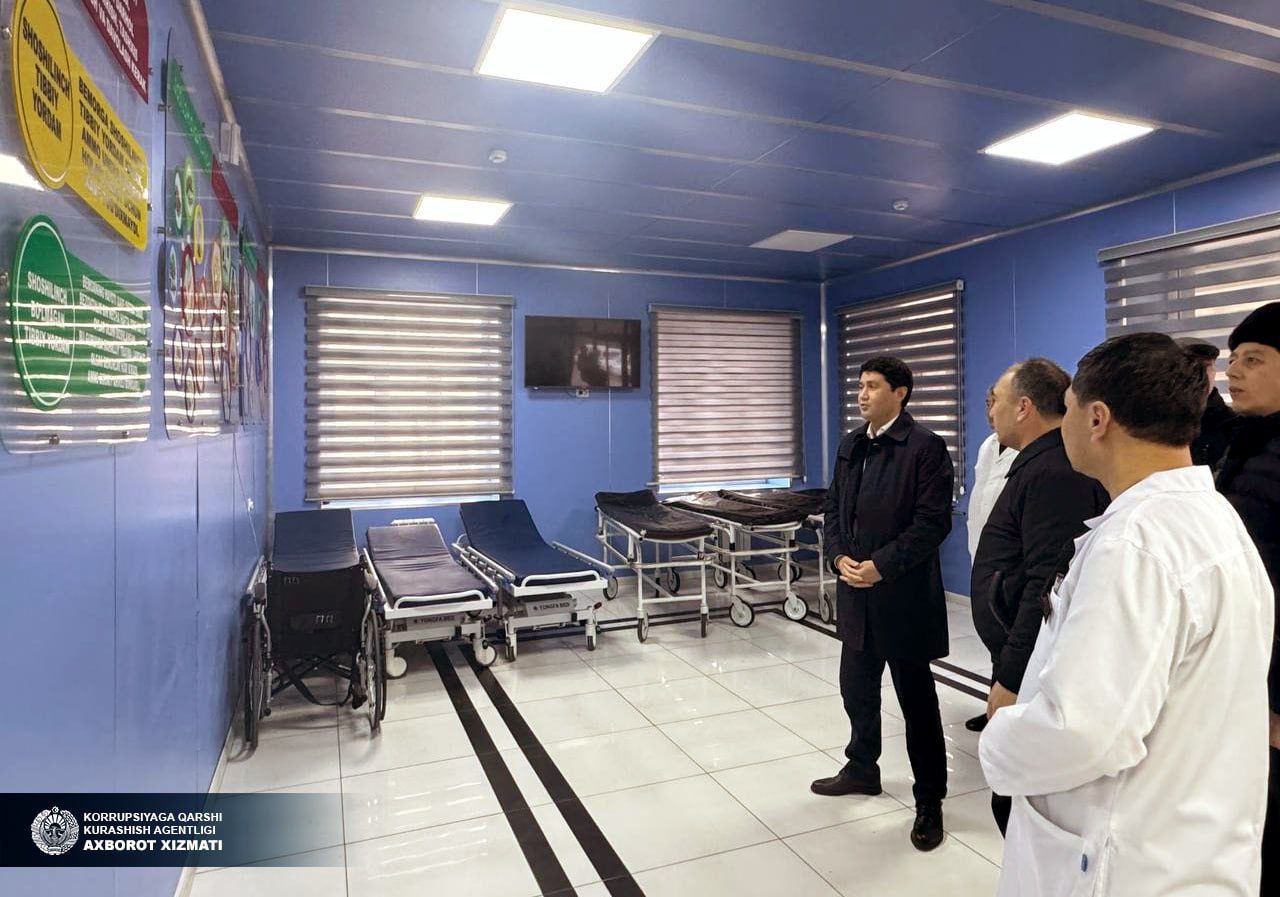
In particular, the system of free and paid medical services and its current state, the level of provision of medical equipment and medicines, the effectiveness of efforts to increase intolerance to corruption and measures taken to prevent corruption risks when hiring medical personnel.
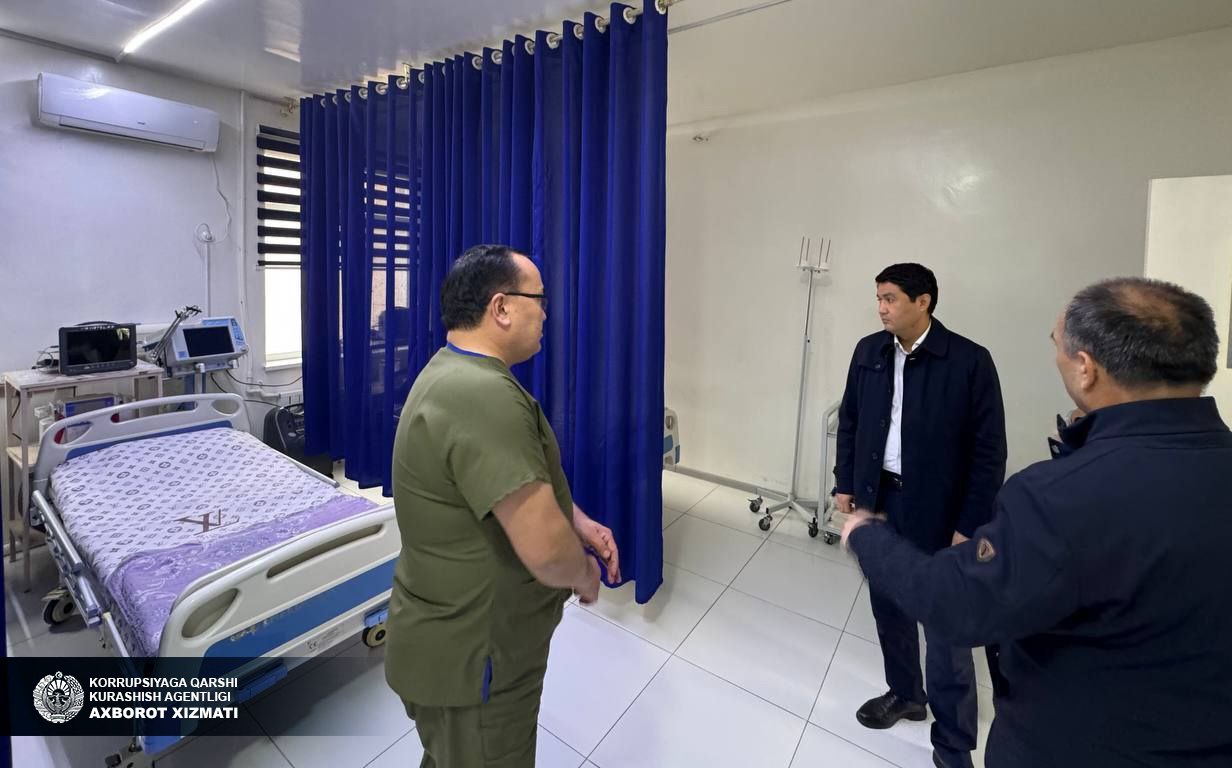
The working group also studied the opinions of patients in this regard.
Studies in medical institutions have identified some shortcomings associated with the implementation of mechanisms to prevent corruption. Responsible employees were given appropriate recommendations and instructions to eliminate the identified shortcomings.
Press Office
The Anti-Corruption Agency